Yes, you can legally grow cannabis at home in many U.S. states right now, but the rules vary enormously depending on where you live, and getting the details wrong can turn a perfectly reasonable home grow into a legal headache. This guide walks you through every step: checking your local laws, setting up a compliant grow space, sourcing legal seeds or clones, running your plants from seed to harvest, understanding what selling really looks like legally, and keeping the kind of records that protect you if anyone ever asks questions. how to grow weed legally in missouri
How to Legally Grow Pot: A Step-by-Step Home Guide
Marcus Holbrook
24 Mar 2026
Check your local legality and licensing rules first
Before you buy a single seed packet, you need to know whether home cultivation is even allowed where you live. As of March 2026, recreational home growing is permitted in a number of adult-use states, but "legal" at the state level does not always mean legal in your city or county. If you’re looking for how to grow marijuanas in nevada, focus first on whether home cultivation is even allowed where you live. Local ordinances can restrict, reduce, or outright ban personal cultivation even where state law allows it. So you need to check two layers: your state law and your local municipal or county code.
Here is a snapshot of plant limits in several key states to show you what that looks like in practice:
| State | Adult-Use Home Grow Allowed? | Plant Limit per Person | Plant Limit per Residence | Key Conditions |
|---|---|---|---|---|
| California | Yes (21+) | 6 plants | 6 plants (regardless of occupants, per many local codes) | Must be indoors/locked/not visible from public; local bans possible |
| Colorado | Yes (21+) | 6 plants (max 3 flowering) | 12 plants (2+ adults) | Enclosed, locked space required; Denver caps at 12 even with more adults |
| Massachusetts | Yes (21+) | 6 plants | 12 plants (2+ adults) | Locked storage; civil penalties for violations; local zoning applies |
| Oregon | Yes (21+) | 4 plants per residence | 4 plants (regardless of occupants) | Not visible from public; local enforcement discretion applies |
| Texas | No (medical only, no home grow) | N/A | N/A | No adult-use or home grow program as of this writing |
| Florida | Check current status | Check current status | Check current status | Laws evolving; verify with state regulator before starting |
A few things to nail down before anything else. First, confirm your age eligibility (21+ for adult-use in all states with home grow programs). Second, find out whether you need to be a resident of that state. Third, check whether your city or county has layered additional restrictions on top of state law. Denver, for example, caps home grows at 12 plants at a residence even when the adult headcount might theoretically support more under state rules. Sacramento County in California defines what a "fully enclosed and secure structure" means and holds you to that definition. Always go to your state's official cannabis regulatory website and then check your local code.
Medical cultivation programs follow a different set of rules entirely, so if you’re looking for how to legally grow medical weed in texas, make sure you follow Texas’s specific registration and grow-site requirements. States like Oregon and Texas have medical programs with their own registration requirements, grow site rules, and patient/caregiver limits that differ from the adult-use framework. If you are growing as a registered medical patient, check with your state health authority (Oregon Health Authority, for example, administers the Oregon Medical Marijuana Program with its own grow site registration process). We cover medical-specific growing in more detail in our guides on how to grow medical weed and how to grow medicinal marijuanas.
The bottom line on licensing for home grows: most adult-use states do not require a state-issued cultivation license for personal home growing within the plant limits. Colorado and Massachusetts treat it as a personal allowance, not a licensed activity. Licensing requirements kick in the moment you enter commercial territory, which we will cover in the selling section below.
Choose a compliant growing setup and stay within your grow limits
Once you know what your rules are, you need a setup that actually meets them. Most legal home grow frameworks share three non-negotiable compliance themes: the grow must be in an enclosed and locked space, it must not be visible from a public right-of-way, and it must be inaccessible to minors. These are not just suggestions. In California, cultivating in a space that is visible from the street or sidewalk is treated as a separate violation from exceeding plant counts, even if your plant numbers are legal. Colorado explicitly requires that if anyone under 21 lives in your home, the grow area must be enclosed and locked in a way that prevents minor access.
Indoor vs. outdoor vs. hydroponic: which setup fits your situation?
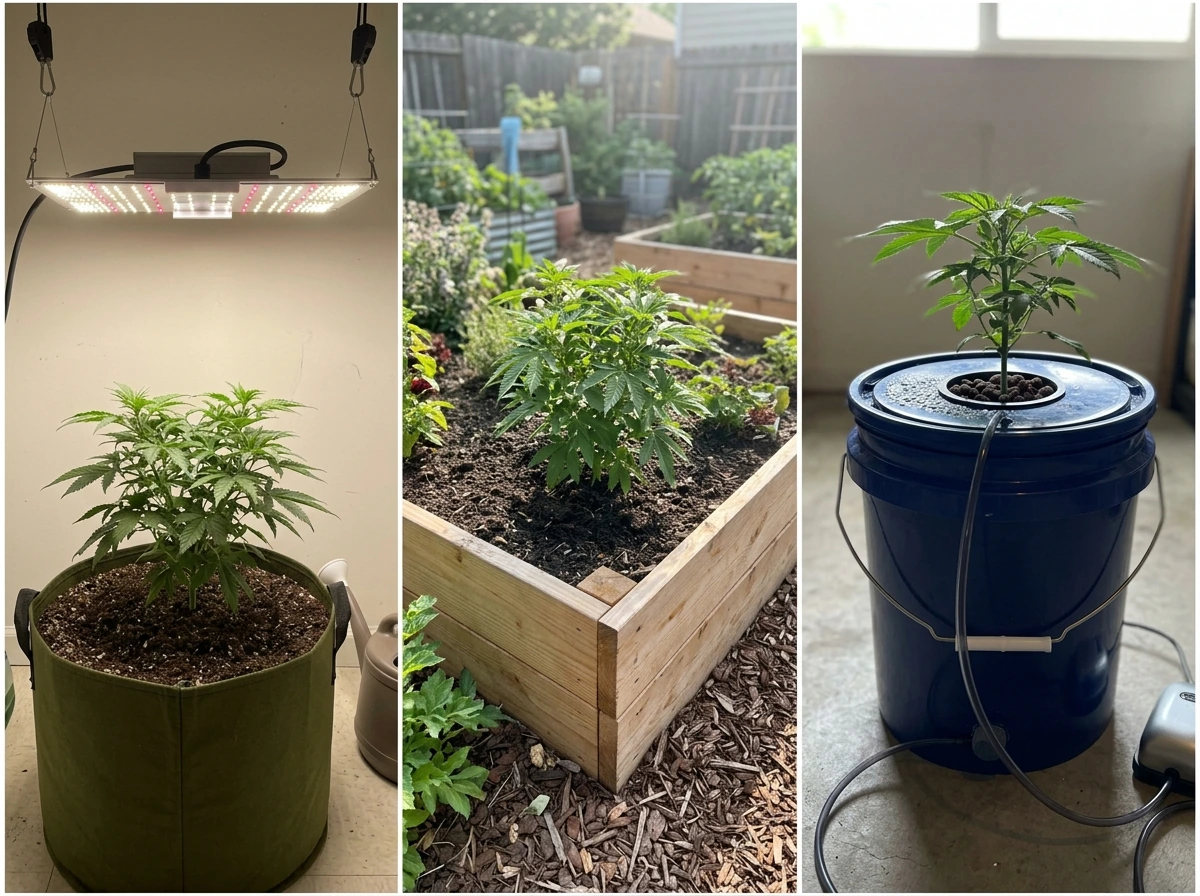
All three growing methods are valid paths to a legal harvest, and the best one depends on your space, budget, climate, and local rules. Here is how they compare on the compliance and practicality dimensions that matter most for a home grower:
| Method | Compliance Ease | Cost to Start | Odor Control | Best For |
|---|---|---|---|---|
| Indoor (tent/room) | Easiest to secure and lock; no visibility issues | $300–$800+ depending on equipment | Manageable with a carbon filter and inline fan | Most climates; renters with limited space; strict local ordinances |
| Outdoor | Harder to conceal from public view; lock/enclosure rules still apply | Lowest cost | Difficult to control during late flower | Private backyards in permissive climates and jurisdictions |
| Hydroponic (indoor) | Same as indoor; fully enclosed setups are straightforward | $500–$1,500+ depending on system | Same as indoor with carbon filtration | Growers wanting faster cycles and higher yields per plant |
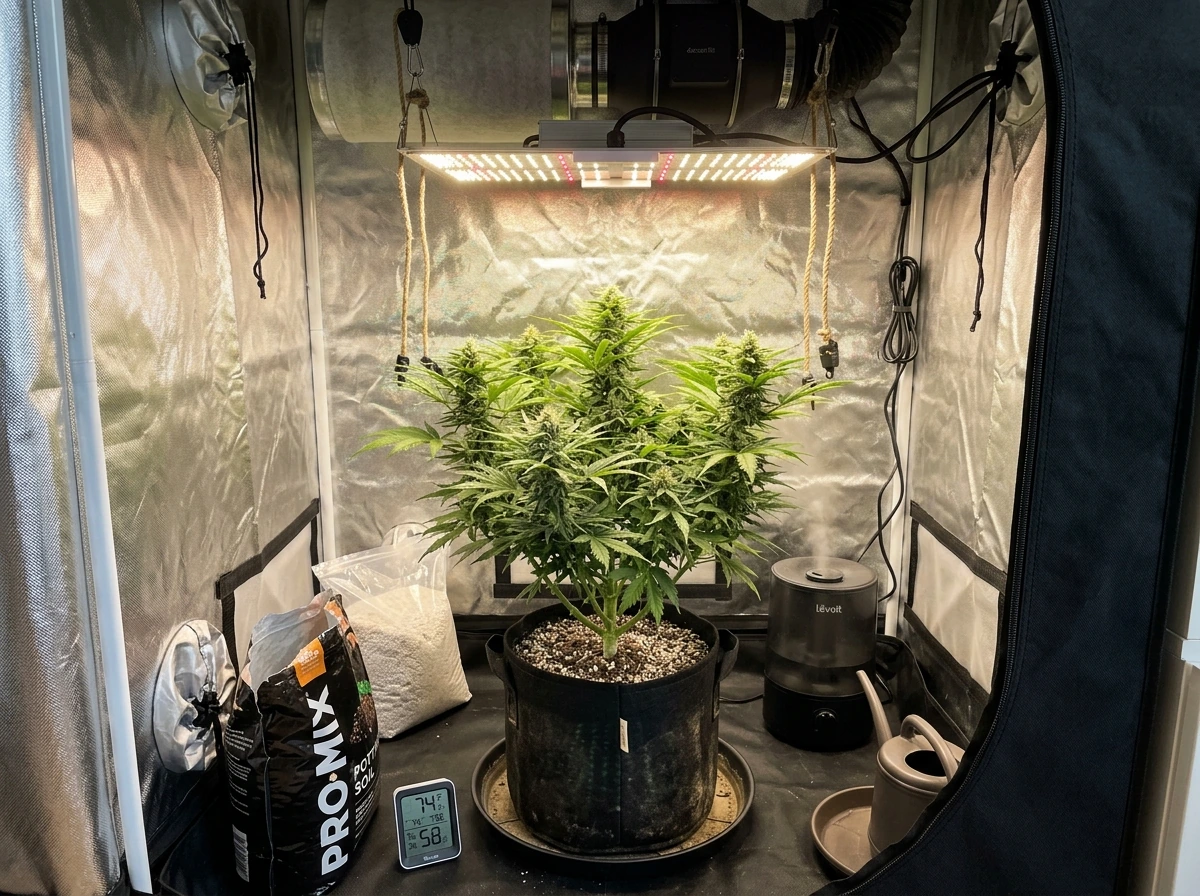
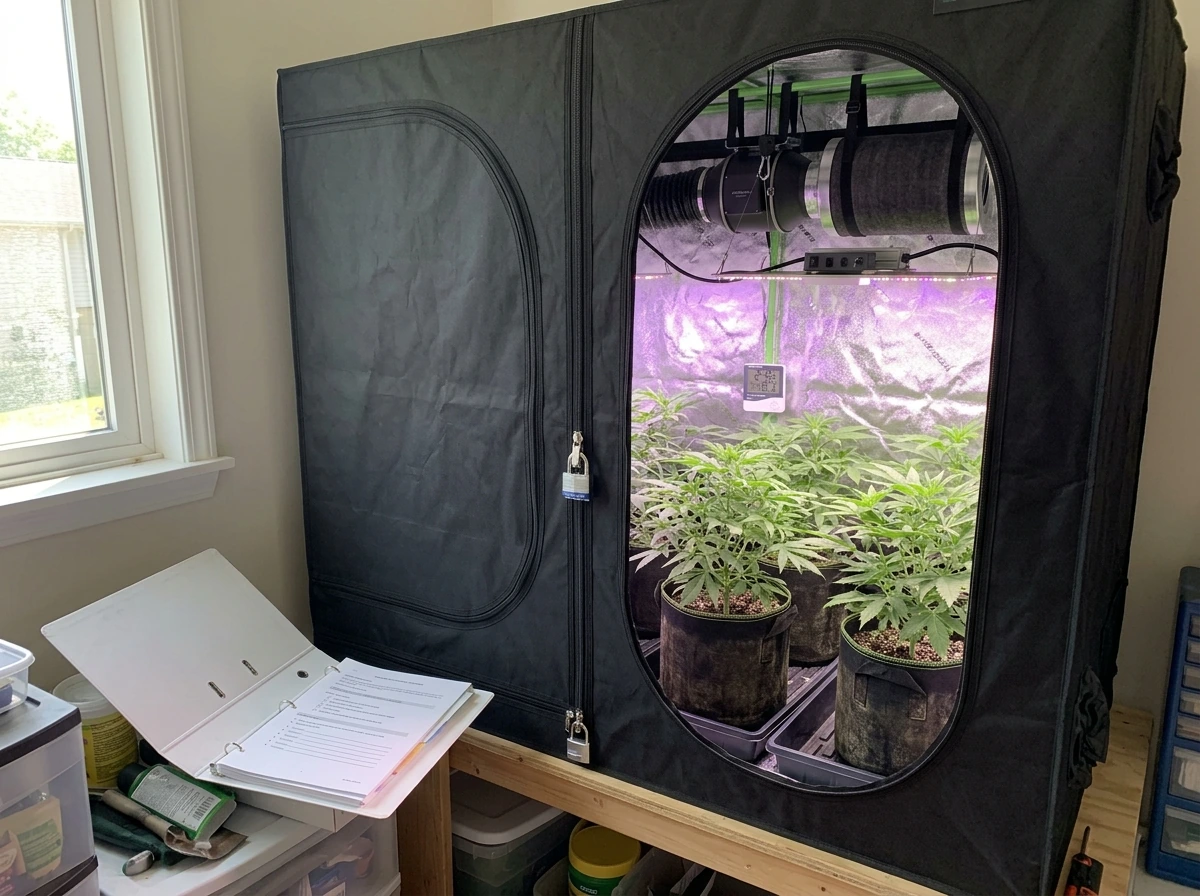
For most new home growers, a 4x4 or 5x5 grow tent indoors is the safest compliance choice. It is fully enclosed by design, easy to lock with a simple padlock, and keeps your plants completely out of sight. A quality carbon filter paired with an inline fan rated for your tent size will handle odor, which matters both for neighbor relations and for legal compliance. California regulatory language, for example, uses "odor not detectable by unaided senses" as the compliance standard. That is achievable indoors with proper filtration; it is much harder to guarantee outdoors.
Plan your grow count before you plant anything. If you are in Colorado and living alone, you can have up to 6 plants but only 3 can be in the flowering stage at once. That means a perpetual harvest setup with 3 plants in veg and 3 in flower is perfectly legal and actually quite efficient. In Oregon, your entire residence is capped at 4 plants regardless of how many adults live there, so plan your space accordingly. Running more plants than your limit is one of the most common compliance mistakes, and it is an easy one to avoid if you plan ahead.
Security and odor basics
A lockable door or a padlocked grow tent satisfies the "enclosed and locked" requirement in most jurisdictions. If you want to go further, a cheap combination lock on your tent zipper plus a door lock on the room works well. For households with children, take this seriously because the legal standard is that minors cannot access the space, not just that you prefer they do not.
For odor control, size your carbon filter to match or slightly exceed your fan's CFM (cubic feet per minute) rating. A 4-inch inline fan pushing 200 CFM needs a carbon filter rated for at least 200 CFM. Replace carbon filters every 12 to 18 months because they lose effectiveness over time. If you are growing outdoors and odor is a concern during the late flowering phase (weeks 6 through 10 for most strains), planting earlier in the season and timing your harvest before peak odor production is a practical mitigation strategy.
How to buy legal seeds or clones and start your grow
Sourcing your plants legally is as important as growing them legally. Buying seeds from a compliant source matters both for your own legal protection and for knowing what you are actually growing. Here is how to do it right.
Where to get legal seeds and clones
- Licensed dispensaries: In states with adult-use programs, licensed dispensaries can sell seeds and clones directly to adults 21+. This is the cleanest legal path because the transaction is recorded and compliant. Ask your local dispensary what they carry.
- Licensed seed banks operating in your state: Some states allow licensed seed retailers to sell to home growers. Verify the retailer has the appropriate state license before purchasing.
- Legal gifting or sharing between adults: In some states, adults can gift small amounts of cannabis, including clones, to other adults without exchange of money. Verify your state's gifting rules before accepting clones this way. Colorado allows gifting up to 1 ounce to other adults 21+ but does not allow sales outside the licensed retail system.
- Online seed banks: This area is legally gray in many jurisdictions. Seeds sold as "novelty" or "souvenir" items are a common workaround, but purchasing and germinating them may still technically violate state or federal law depending on your location. When in doubt, stick to in-state licensed sources.
For a first grow, buying a clone from a dispensary is actually a great move. You skip the germination phase, you know the sex of the plant (it will be female), and many dispensaries can tell you the approximate age and lineage of the clone. If you prefer seeds, look for "feminized" seeds to avoid the risk of growing male plants, which can pollinate your females and ruin your flower crop.
Choosing a strain for your situation
Strain selection for a legal home grow should account for your plant count limit, your available space, and your growing method. If you are limited to 4 plants (like in Oregon), choose a strain that produces well per plant. Indica-dominant or hybrid strains often grow more compactly than sativa-dominant genetics, which matters if you are working with a 4x4 tent and a 6-plant limit. Auto-flowering strains finish in 70 to 90 days from seed regardless of light schedule, which makes them ideal for closet grows or outdoor grows in short-season climates. Photoperiod strains give you more control over the veg-to-flower transition but require managing your light cycle (18 hours on for veg, 12 hours on for flower indoors).
Cultivation basics from seed to harvest
Growing cannabis well is not complicated once you understand the core variables. I made a lot of mistakes early on by overcomplicating things, and the truth is that cannabis is a resilient plant. Get the environment roughly right, feed it appropriately, and it will reward you. Here is what to focus on at each stage.
Germination and seedling stage (days 1 to 14)
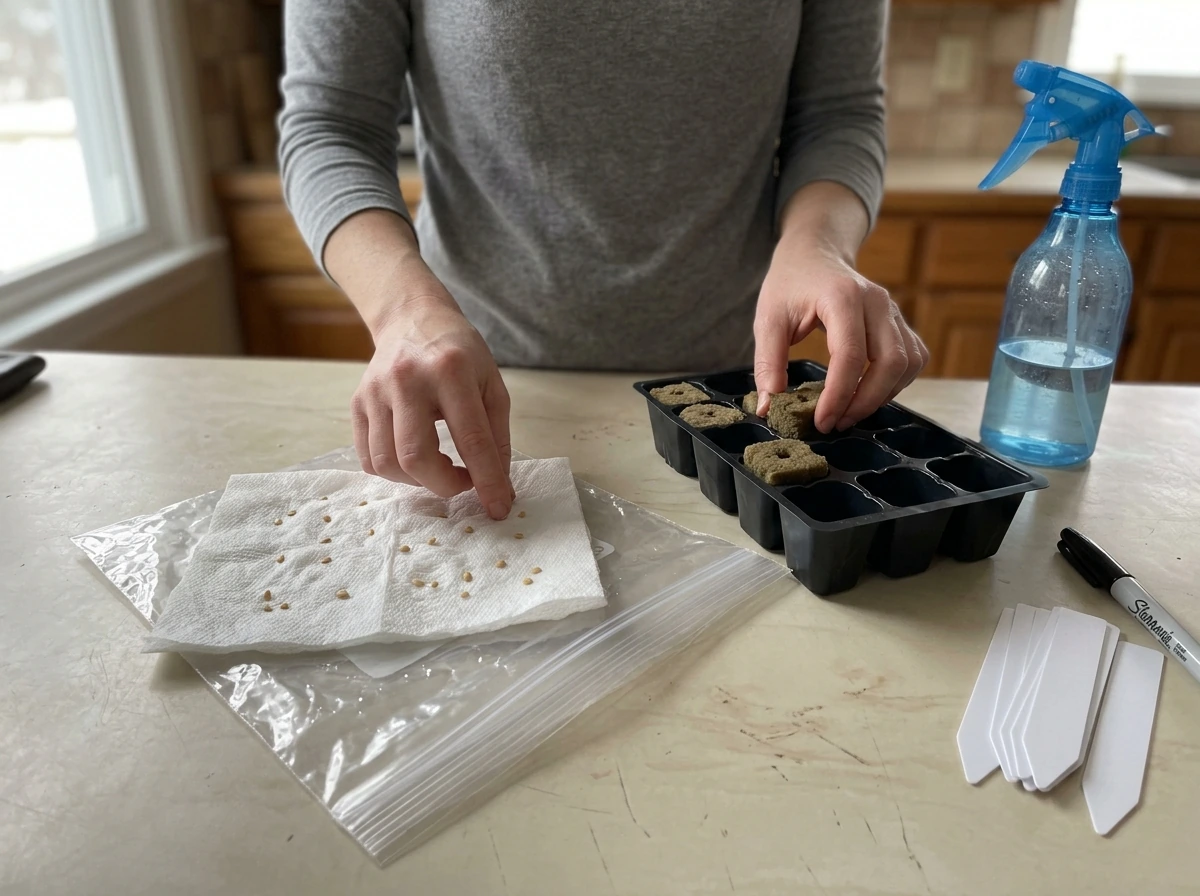
Germinate seeds using the paper towel method (damp paper towel in a sealed bag in a warm, dark spot) or directly in a starter cube or small pot. Ideal germination temperature is 70 to 85 degrees Fahrenheit. Once the taproot appears (usually within 24 to 72 hours), plant it root-down about a quarter inch deep. Seedlings need gentle light (a T5 fluorescent or LED set to low intensity works well) and consistent moisture, but do not overwater. At this stage, the roots are tiny and sitting in wet soil for too long causes damping off, which kills seedlings fast.
Vegetative stage (weeks 2 to 8 for photoperiod plants)
During veg, your plant builds the structure that will support your flowers. Key environmental targets: temperature 70 to 85 degrees Fahrenheit, relative humidity 50 to 70 percent, and 18 hours of light per day for indoor photoperiod grows. Water when the top inch of soil is dry, and begin introducing a grow-phase nutrient solution once you see the third or fourth node develop. Look for nutrients with a higher nitrogen (N) ratio during veg, such as an N-P-K of 3-1-2 or similar. Keep your pH between 6.0 and 7.0 for soil grows or 5.5 to 6.5 for hydroponic or coco coir setups. pH problems are the number one reason new growers see nutrient deficiencies, so investing in a reliable pH meter is worth every penny.
Flowering stage (weeks 1 to 10+ depending on strain)
Switch indoor photoperiod plants to 12 hours of light and 12 hours of uninterrupted darkness to trigger flowering. Outdoor plants begin flowering naturally as daylight hours shorten in late summer. During flower, drop humidity to 40 to 50 percent (lower in the final two weeks, ideally 35 to 45 percent) to reduce mold risk and encourage resin production. Shift your nutrients toward a bloom formula with lower nitrogen and higher phosphorus and potassium (P and K), such as 1-3-2 or similar. Stop feeding nitrogen-heavy nutrients by week 5 or 6 of flower. The most common flowering mistake I see is continuing high-nitrogen feeding too deep into flower, which delays maturity and creates that harsh "green" taste in the final product.
Harvest, drying, and curing
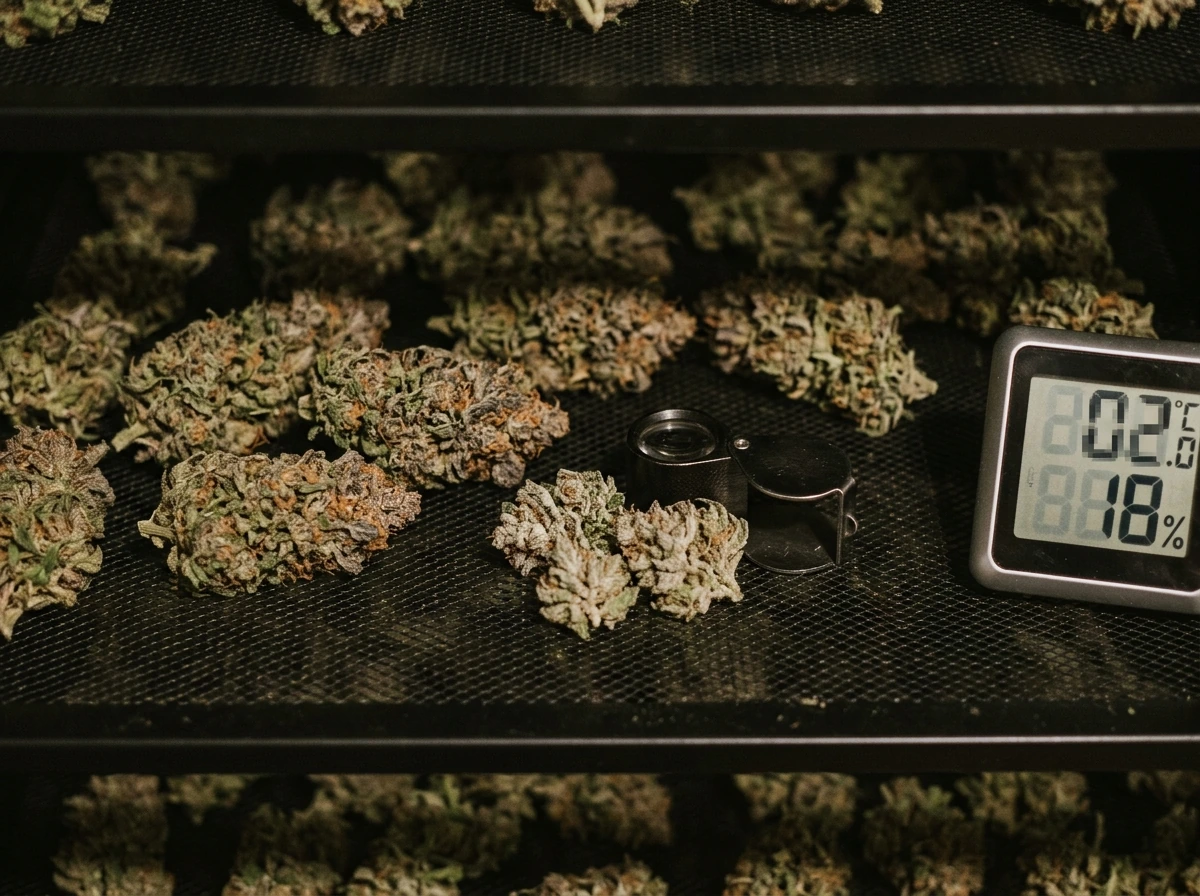
Harvest timing is best determined by trichome color using a jeweler's loupe or a digital microscope. Clear trichomes mean harvest too early. Milky/cloudy trichomes indicate peak THC. Amber trichomes signal degradation of THC into CBN, which produces a more sedative effect. Most growers aim for a mix of mostly cloudy with 10 to 20 percent amber. After harvest, dry your buds slowly in a dark space at 60 to 70 degrees Fahrenheit and 55 to 65 percent humidity for 7 to 14 days, then cure in sealed glass jars, burping daily for the first two weeks. Proper drying and curing is what separates smooth, flavorful home-grown cannabis from harsh, grassy-smelling material.
If you want a much deeper dive into the full cultivation process, our guide on how to grow pot covers everything from setup through harvest in step-by-step detail. And if you are wondering whether the whole process is actually as complicated as it sounds, our piece on how hard it is to grow pot gives you an honest answer.
How to sell pot legally (and what usually stops you)
This is where a lot of home growers run into a hard wall, so let me be direct: in virtually every legal adult-use state, selling cannabis from a personal home grow is not permitted without a commercial cultivation license. The legal home grow allowance is for personal use, not commercial activity. The moment money changes hands for homegrown cannabis, you are operating as an unlicensed cannabis business, which is illegal even in states with robust adult-use programs.
What "gifting" actually allows
Some states allow adults to gift small amounts of cannabis to other adults without monetary exchange. In Colorado, you can gift up to 1 ounce to another adult 21+, but this cannot involve any payment, trade, or commercial arrangement. Massachusetts similarly permits personal gifting within the possession limits. Gifting is not a legal gray area for selling: attaching a price to homegrown cannabis, even indirectly (like charging for a "service" and including cannabis as a bonus), has been prosecuted in multiple states. Do not do it.
If you actually want to sell cannabis legally
If your goal is to legally sell cannabis, you are looking at a commercial licensing pathway, which is a completely different process from home growing. In California, for example, the Department of Cannabis Control issues state cultivation licenses for commercial activity, and that involves background checks, local approvals, compliance with track-and-trace systems, facility inspections, and significant capital investment. Massachusetts points home growers to the Cannabis Control Commission for all commercial licensing frameworks, and retail sales are subject to state excise taxes on top of local taxes.
The path to legal cannabis sales in most states involves: obtaining a state cultivation license, obtaining a local business permit, complying with track-and-trace requirements (so every ounce can be accounted for), and in many cases selling only through licensed retail channels rather than directly to consumers. This is a business venture, not an extension of your home grow, and it requires legal and business counsel specific to your state. If that is your direction, start by contacting your state's cannabis regulatory authority to get the current licensing requirements.
Safety, responsibility, and staying legally compliant
Running a legal home grow is not just about hitting the right plant count on day one. It is about maintaining compliance throughout the grow cycle, keeping your space safe, and knowing what to do if something goes sideways. Here is how to build those habits from the start.
Recordkeeping basics
You are not legally required to keep a grow journal as a personal home grower in most adult-use states, but keeping one is one of the smartest things you can do. Oregon's medical marijuana program, for example, requires medical growers to maintain records sufficient to demonstrate compliance. Even for adult-use personal grows, a simple log that documents your plant count, strain, start date, and any harvest dates gives you something concrete to reference if questions arise. Keep your seed or clone purchase receipts as proof of a legal acquisition source. Store these records somewhere accessible but secure.
A basic compliance log should include:
- Date each plant was started (germination or clone introduction)
- Strain name and source (dispensary name, receipt number)
- Current stage of each plant (veg or flower) and count in each stage
- Harvest dates and approximate yield for your own reference
- Any pest treatments or nutrients used (useful for troubleshooting and for demonstrating you are not running a commercial operation)
Common compliance pitfalls and how to avoid them
- Exceeding your plant count: Count every plant in your grow space, including seedlings and clones that are rooting. In most states, a seedling counts as a plant. Do not start more than your limit allows.
- Plants visible from outside: Even one plant visible through a window or over a fence can trigger a complaint and a visit. Grow indoors or use opaque fencing and screen structures for outdoor grows.
- Unlocked grow spaces: A grow space without a lock is a compliance failure in states that require secured cultivation areas. Install a lock before you plant, not after.
- Minors accessing the grow area: This is taken seriously. If children live in or regularly visit your home, a padlocked tent or a dedicated locked room is not optional.
- Transporting more than your possession limit: Legal home growing does not give you unlimited transport rights. Know your state's possession and transport limits before moving any cannabis outside your residence.
- Growing in a rental property without permission: Many leases prohibit cultivation. Check your lease. Some landlords will give written permission; others will not. Growing without permission can result in eviction regardless of state law.
- Assuming state law covers you everywhere: If you are growing legally under state law but your municipality has banned home cultivation, local law enforcement can still act. Check both layers every time.
If something goes wrong
If a neighbor complains, a landlord raises concerns, or law enforcement makes contact, stay calm and do not consent to a search without a warrant unless you are comfortable doing so. If you are within your legal limits and have documentation to support it, you are in a much stronger position than if you have been keeping no records at all. Contact a cannabis-experienced attorney in your state if you face any formal legal challenge. Many jurisdictions have civil penalty structures for minor violations (Massachusetts, for example, describes civil penalties and forfeiture consequences for home cultivation violations) rather than criminal charges for first-time personal grow overages, but the specifics depend entirely on where you are.
Growing legally is genuinely achievable for most adults in legal states. The framework is not complicated: confirm your rules at both the state and local level, set up a secured and enclosed grow space, source your plants from legal channels, stay within your plant count throughout the entire grow cycle, and never sell without a commercial license. Do those things consistently and you will have a compliant, productive grow from your very first run.
FAQ
What happens if I stay under the plant limit but too many plants are in the flowering stage?
In most places, you can have a personal grow, but you must follow the strictest “count” rule that applies to your household and your grow area. If your jurisdiction limits flowering plants separately (for example, only a certain number can be in flower at once), you need to track growth stage, not just total plants you possess.
Is it still legal if I move my plants outdoors during the day or for a few weeks to save on electricity?
Keep plants in the same secure footprint the rules describe, especially the “not visible from a public right-of-way” requirement. Moving plants around (for example, from an indoor grow tent to a porch or backyard) can accidentally create a visibility or access violation, even if the final count is legal.
Can I have a friend or paid contractor grow it for me as long as I buy the seeds and keep the plants?
Generally, you cannot outsource the actual cultivation to someone else in a way that looks like commercial activity. A safer approach is having a licensed medical or adult-use caregiver structure where allowed, or ensure any helping hands stays within your household arrangement. If you pay a third party to grow for you, it can be treated as unlicensed business depending on your state.
If I never accept cash directly, could I still be considered selling if I do exchanges like gift bundles or paid services?
Most jurisdictions treat “commercial sale” as any exchange for value, including indirect arrangements. To reduce risk, avoid any price tied to cannabis, any bundle where cannabis is the bonus, and any “service fee” model where cannabis is part of what you are providing.
If adult-use home growing is restricted where I live, can I legally grow under a medical program instead?
Yes, in some states you may qualify for home grow under medical rules, but you typically must be an enrolled patient and follow that program’s grow-site registration and patient or caregiver possession limits. Medical and adult-use frameworks often use different caps, different access rules, and sometimes require prior approval for the grow location.
What documents should I keep to prove my seeds or clones were legally obtained?
A “legal acquisition” means you can show where seeds or clones came from. Keep invoices/receipts and any packaging or labels tied to the purchase. If you can’t prove origin during an inquiry, it can turn an otherwise compliant setup into a serious problem.
How do I check the local rules for my exact address, not just my county or city generally?
Avoid assuming your city is fine just because the state allows it. Local bans or stricter caps can apply to specific zones, multi-unit buildings, or properties with certain setbacks. Before you set up, confirm whether your exact address is allowed under both zoning and cannabis home cultivation ordinances.
What’s the easiest way to avoid accidentally exceeding the limit at any time during the grow cycle?
Track your plant stage and harvest dates from day one. Since some places regulate flowering counts separately or require limits “at any time,” starting more plants than allowed even briefly can create a violation. A simple calendar plus a daily or weekly count snapshot helps prevent accidental overages.
Do I need special equipment for odor control, or will basic ventilation usually be enough for compliance?
Yes, odor control can be a legal compliance issue, not just a neighbor-relations one. Even with a tent, incomplete filtration, incorrect fan sizing, or leaving lights off and fans unattended can cause detectable odor. Use your fan and carbon filter sizing guidance, and plan for higher odor weeks late in flower.
If my state allows home grow, can my landlord or HOA still ban it?
If you have a landlord or live in an HOA or apartment, state legality does not automatically override private rules. Many leases include cannabis prohibitions, and some HOAs enforce restrictions even when the state allows personal growing. Get written permission if your community’s rules allow it.
What should I do if I realize I accidentally broke a rule during my grow?
If something goes wrong and you exceed the limit, the best move is to stop further noncompliance immediately and correct the issue within your allowed framework. Because penalties vary a lot, document what happened and consult a cannabis-experienced attorney before you contact law enforcement beyond routine inquiries.
If I lock the tent but a child could still reach the area around it, is that risky legally?
Most states that allow home grows still restrict visibility and access, and “inaccessible to minors” is usually about physical control and preventing entry, not just supervision. A locked room plus locked container for the grow space is typically more robust than a single lock if there are children with regular access to the home.
Next Article
How to Grow Pot in Containers Step-by-Step Guide
Beginner step-by-step container cannabis grow guide: pot size, drainage, indoor vs outdoor setup, nutrients, pests and h